Annual Report Searches
Alphabetical Search

Top Ten Bestseller List of Business Books & Business Book Review for the month of April

The current top ten best selling books for business. The list is compiled based on information received from retail bookstores throughout the U.S.A.

Read the latest book review by Henry Holtzman
1
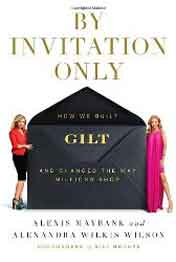
By Invitation Only: How We Built Gilt and Changed the Way We Shop

By Invitation Only: How We Built Gilt and Changed the Way We Shop

Alexis Maybank and Alexandra Wilkis Wilson

Innovating the high-end outlet version of "sample selling."
Last Month's Ranking: New
2
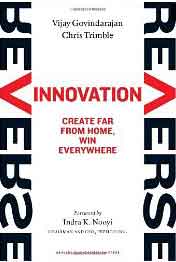
Reverse Innovation: Create Far From Home, Win Everywhere

Reverse Innovation: Create Far From Home, Win Everywhere

Vijay Govindarajan and Chris Trimble

How to make innovation happen in emerging markets.
Last Month's Ranking: New
3
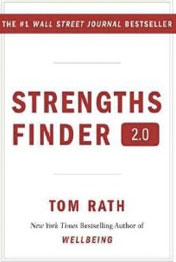
Strengths Finder 2.0: A New and Updated Edition of the Online Test from Gallup's Now, Discover Your Strengths

Strengths Finder 2.0: A New and Updated Edition of the Online Test from Gallup's Now, Discover Your Strengths

Tom Rath

Discover your strengths and integrate them with your career.

Last Month's Ranking: 2
4
Steve Jobs

Steve Jobs

Walter Isaacson

The story of a modern Thomas Edison.

Last Month's Ranking: 1
5
The Start-up of You: Adapt to the Future, Invest in Yourself, and Transform Your Career

The Start-up of You: Adapt to the Future, Invest in Yourself, and Transform Your Career

Reid Hoffman and Ben Casnocha

Managing your career as if you were a starting a new business.
Last Month's Ranking: 3
6
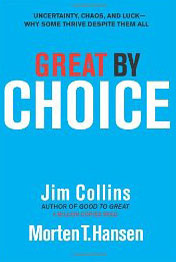
Great by Choice: Uncertainty, Chaos, and Luck-Why Some Thrive Despite Them All

Great by Choice: Uncertainty, Chaos, and Luck-Why Some Thrive Despite Them All

Jim Collins

Why some people succeed against all the odds.
Last Month's Ranking: 4
7
That Used to Be Us: How America Fell Behind in the World It Invented and How We Can Come Back

That Used to Be Us: How America Fell Behind in the World It Invented and How We Can Come Back

Thomas L. Friedman & Michael Mandlebaum

One possible roadmap back to fiscal and market stability.

Last Month's Ranking: 5
8
The Startup Owner's Manual: The Step-by-Step Guide for Building A Great Company

The Startup Owner's Manual: The Step-by-Step Guide for Building A Great Company

Steve Blank and Bob Dorf

A "how-to" book for business owners.
Last Month's Ranking: 6
9
The Little Book of Leadership: The 12.5 Strengths of Responsible, Reliable, Remarkable Leaders That Create Results, Rewards, and Resilience

The Little Book of Leadership: The 12.5 Strengths of Responsible, Reliable, Remarkable Leaders That Create Results, Rewards, and Resilience

Jeffrey Gitomer & Paul Hersey

A concise look at the fundamental traits of leadership.
Last Month's Ranking: 7
10
EntreLeadership: 20 Years of Practical Business Wisdom from the Trenches

EntreLeadership: 20 Years of Practical Business Wisdom from the Trenches

Dave Ramsey

Experienced advice on business leadership.

Last Month's Ranking: 10


Business Book Review by Henry Holtzman

"The Winning Factor: Inspire Gold-Medal Performance in Your Employees" by Peter Jensen
AMACOM; New York, New York; 2012; 228 pages; $24.95.

During this political season there are pundits and candidates who either espouse or support the belief that the most important person in any business is the chief executive or owner. On the other hand, every CEO or owner-president of a business who I've ever had the pleasure of meeting takes the opposite view. Today's business leaders give the credit for a company's growth to the people in their organization.

While it's true that the leader must lead, he or she must also coach their key employees. Author Peter Jensen, himself a coach of Canadian Olympic skaters, a business consultant, and an instructor at Queen's School of Business, believes that there are three factors that can be used to enhance the potential of the people that work for a business manager regardless of title. He puts it this way:

"1. Nature. These factors establish the physical and mental 'roadmap' of the individual. They include genetic as well as other factors such as a mother's alcohol consumption during pregnancy."
"2. Nurture. These are the social and physical (environmental) Factors that contribute to the shaping of the individual, such as parents, friends school, financial status, culture, and nationality. 'Nurture' modifies your 'nature.' A good upbringing is obviously an asset, but...a less-than-ideal upbringing need not limit where you end up. The term ideal is is also in need of some definition in that a conflicting-and adversity-free upbringing sometimes can be limiting in terms of personal growth and development."
"3. The Third Factor. This is the factor of choice. No matter what the genetic and environmental endowments bestowed on individuals, they have the potential to transcend these endowments through the action and power of the Third Factor. The individual can make a conscious choice to change and to become a higher-level individual. Simply put, the Third Factor is the important role that an individual plays in his or her own 'becoming'."

Jensen explains the "third factor" as "a an uncovering of what we already possess and a realization of what is therefore possible. It's the job of coaches to create a developmental bias to build "competence, commitment, capacity, and passion" in the people they are developing. The author points out that coaches who serve their own purposes instead of the purposes of the people they instruct don't get very far. He notes, "The exceptional coaches stand out because of results their people are able to produce."

With these concepts in mind, then explores what the manager-coaches must do to achieve their goals in building their businesses. As Jensen does throughout the book he starts he begins with very simple concepts and then builds on them. Here's one example in his Discussion on core skills in coaching:

"There are two core skills in the consulting style of coaching; asking effective questions and listening actively. I will speak mainly about generating self-awareness and self-responsibility-the 'to do's' of the Third Factor. These dynamics lead to engaging other people and motivating them to evolve to a higher level. It's obvious how these skills connect to igniting the Third Factor."

Jensen then takes 16 pages to elaborate on what he means by asking questions and listening for the answers. He builds on this concept, offering examples and suggesting questions that coaches must continually ask themselves. One of these is, "If people continually come back to you for information, answers, and feedback, are you developing them?"

The book is deceptively easy to read, delivers valuable information, and makes you think. That's not a bad combination when you consider the growing number of books on the subject, some of which read more like psychology texts than straightforward books on engaging your employees and growing your business.
- Henry Holtzman

About The Public Register | Corporate Advertisers | Corporate Services | Users' Comments | Contact Us | Corporate Link to Us | Privacy Policy

CorporateWindow.com | PublicRegisterOnline.Com
©2011  The Public Register, Woodstock, CT  webmaster@prars.com